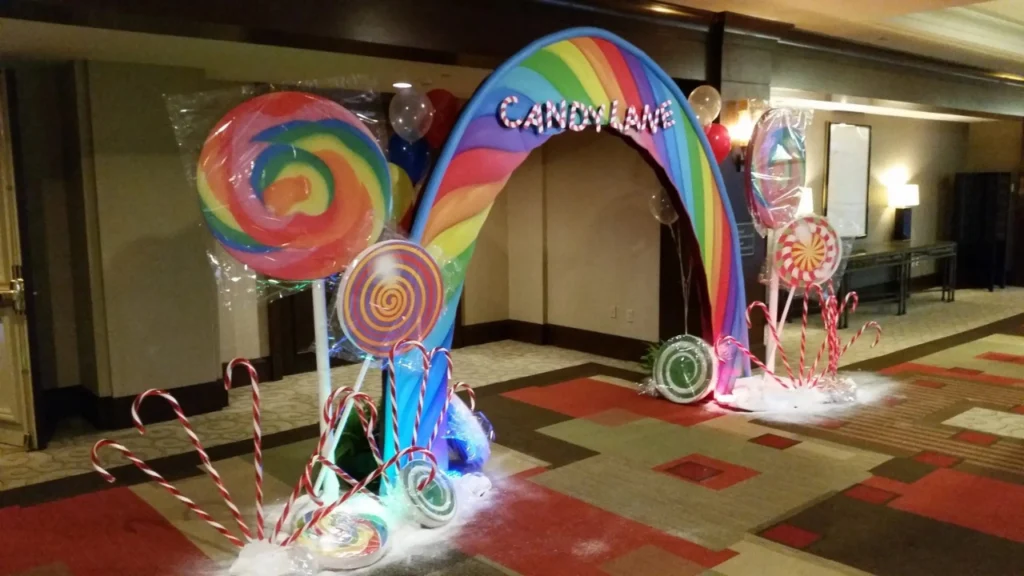
What Event Signage and Scenic Fabrication Include
Event signage and scenic fabrication cover the physical elements that help transform a venue and communicate an event’s theme. These can include entrance arches, stage backdrops, branded walls, dimensional logos, directional signs, photo moments, and freestanding scenic structures.
Unlike standard signage, scenic elements often need to work as part of a larger environment. They should support the event’s visual identity while considering audience movement, sightlines, venue rules, and the practical demands of setup and teardown.
Creating a Memorable First Impression
An entrance feature or branded backdrop can set expectations before guests reach the main event space. Consistent colors, typography, shapes, and messaging help connect the entrance, stage, registration area, and other visitor touchpoints.
Well-planned event features can also create useful photo opportunities and help guests navigate the venue. The strongest concepts balance visual impact with clear messaging and the real dimensions of the location.
Designing for the Venue and Audience
Venue conditions influence the scale and construction of scenic elements. Ceiling height, access routes, floor loading, lighting, audience distance, and available setup time should be considered early. A design that looks compelling in a rendering must also be buildable, transportable, and appropriate for the actual space.
Audience behavior matters too. Registration signs need to be easy to read, photo walls need room for people to gather, and stage elements should not block views or interfere with event operations.
From Concept Approval to Fabrication
The process typically begins with a creative brief, visual references, venue details, and a target budget. The design is then developed into dimensions and production details for review. Once approved, fabrication may involve CNC-cut components, dimensional lettering, printed graphics, assembly, finishing, and preparation for transport.
Confirming design details before production reduces last-minute changes. It is helpful to agree on artwork, colors, materials, quantities, structural needs, and responsibilities for delivery and installation.
Planning the Timeline and Installation
Event schedules can be fixed, so the fabrication timeline should include design approval, material sourcing, production, finishing, quality checks, packing, transport, and on-site installation. Build in time for venue coordination and any required approvals.
Provide the event date, venue address, access times, dimensions, and any installation restrictions at the start. Capitol CNC can help plan custom fabricated signage and scenic elements around the event’s visual goals and production requirements.
FREQUENTLY ASKED QUESTION
What counts as custom event signage?
Examples include branded entrance signs, directional signage, stage graphics, sponsor displays, dimensional logos, and photo backdrops.
Can scenic elements be made to match an event theme?
Yes. Colors, shaes, artwork, materials, and finishes can be planned around the approved event concept and brand guidelines.
How early should event fabrication begin?
Start as early as practical, allowing time for design approval, fabrication, finishing, transport, and installation. The required lead time depends on scope and complexity.
Can event features be reused?
Some elements can be designed for reuse, modular assembly, or storage. Reusability should be considered during the initial design stage.
What venue details should be shared?
Share venue dimensions, access routes, ceiling heights, setup and teardown windows, restrictions, and any relevant safety or installation requirements.